A sewer line problem rarely happens without warning. As underground pipes age, shift, or develop cracks, homeowners may begin noticing changes inside the home or throughout the yard. Recognizing these warning signs early can help prevent sewage backups, costly property damage, and more extensive repairs.
Here are some of the most common signs that your sewer line may be damaged or collapsing.
Sign 1: Multiple Drains Are Slow or Backing Up
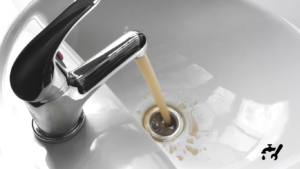
One slow drain may simply indicate a localized clog, but when several plumbing fixtures throughout the home begin draining slowly at the same time, the problem may be deeper within the main sewer line. Slow drains, standing water in showers, and gurgling toilets can all indicate a potential sewer line issue [1].
If these symptoms continue after clearing individual drains, it may be time to have the sewer line professionally inspected.
Sign 2: Gurgling Toilets and Unusual Drain Noises
A damaged sewer line can interfere with the normal movement of wastewater and air through the plumbing system. This may cause toilets to gurgle after flushing or produce bubbling sounds when other fixtures, such as a washing machine or sink, are draining.
In some cases, homeowners may also notice wet areas around floor drains after doing laundry. These symptoms can develop when root intrusion or other blockages begin restricting the flow inside the sewer pipe [2].
Sign 3: Sewage Odors or Wet Areas in the Yard
Not every sewer problem is visible indoors. Persistent sewage odors, wet patches in the yard, or unusually soggy areas can indicate that a sewer pipe has cracked or broken underground [1]. If left unrepaired, leaking sewage beneath the property can create sanitation concerns while also attracting pests.
Some homeowners may also notice sections of grass that appear greener or grow more quickly because leaking wastewater is providing additional moisture and nutrients to the surrounding soil.
Sign 4: Tree Roots Can Worsen Existing Pipe Damage
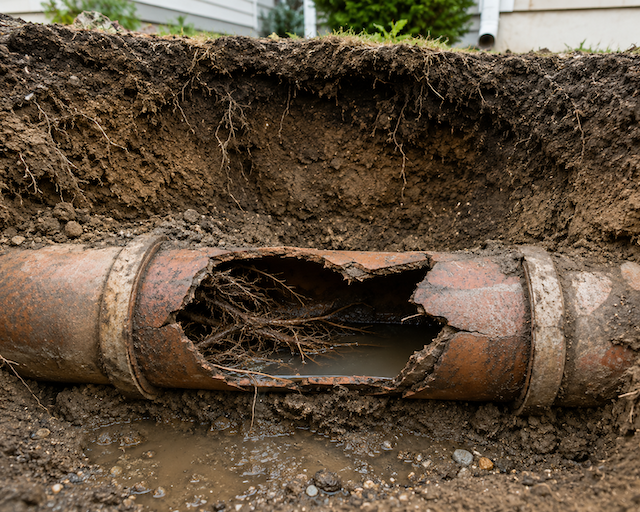
Tree roots are often blamed for broken sewer pipes, but roots typically enter through existing cracks, loose joints, or other vulnerabilities rather than creating new breaks themselves [3]. Once inside the pipe, they continue growing toward moisture and nutrients, eventually forming dense root masses that trap grease, paper products, and other debris.
As the roots expand, they can place additional pressure on damaged sections of pipe, increasing the likelihood of severe blockages or structural failure.
Sign 5: Recurring Sewer Backups Should Not Be ignored
If sewage continues backing up into sinks, tubs, or floor drains even after previous drain cleaning, there may be an underlying structural issue rather than a simple clog. Cracked pipes, separated joints, sagging sections, and severe root intrusion can all create recurring drainage problems that require more than routine maintenance.
Ignoring repeated backups may allow the damage to worsen over time, potentially resulting in a partial or complete sewer line collapse.
A Camera Inspection Can Reveal the Problem
Many sewer line issues occur underground, making them impossible to diagnose by symptoms alone. A sewer camera inspection allows professionals to evaluate the pipe’s condition, identify root intrusion, locate cracks or defects, and determine the exact location of the problem [4]. This information helps ensure the appropriate repair is recommended without unnecessary excavation.
Protect Your Home Before Sewer Damage Gets Worse
Recurring drain problems, sewage odors, gurgling toilets, or unexplained wet areas around your property should never be ignored. C.D. Shanahan’s provides professional sewer line inspections and repairs to identify problems early and help homeowners avoid more extensive damage.
Contact C.D. Shanahan’s today to schedule an inspection and restore confidence in your home’s plumbing system.
Sources:
- https://sanitation.lacity.gov/san/faces/home/portal/s-lsh-wwd/s-lsh-wwd-cw/s-lsh-wwd-cw-s/s-lsh-wwd-cw-s-srfap/s-lsh-wwd-cw-s-srfap-slrr?_afrLoop=1506392008001815&_afrWindowMode=0&_afrWindowId=null&_adf.ctrl-state=5bdq5u27l_205#!%40%40%3F_afrWindowId%3Dnull%26_afrLoop%3D1506392008001815%26_afrWindowMode%3D0%26_adf.ctrl-state%3D5bdq5u27l_209
- https://www.traversecitymi.gov/government/city-departments/sewer-and-water/tree-root-faq.html
- https://union.ces.ncsu.edu/tree-roots-and-sewer-lines/
- https://www.portland.gov/bes/connecting-sewer/sewer-photo-video-map