
When winter keeps your windows shut and your HVAC system is circulating the same air all day, indoor air quality matters more than most homeowners realize. In fact, indoor air can be more polluted than outdoor air [1], especially when every day irritants like dust, pet dander, and chemical fumes build up inside. Whole-home air purification helps tackle that problem at the source, right in your HVAC system, so cleaner air reaches every room.
What counts as “poor” indoor air?
Indoor air can carry a mix of pollutants, including dust, pet dander, mold spores, VOCs (volatile organic compounds), bacteria, and viruses. The tricky part is that many of these contaminants aren’t obvious, meaning you may feel the effects (irritation, congestion, headaches, fatigue) before you ever identify the cause. Understanding what’s in the air is step one; improving how your home treats that air is step two.
How whole-home purification actually works
Unlike a portable purifier that only treats one room, a whole-home system integrates with your HVAC to clean air as it moves through your ductwork. Depending on your home and needs, that can include a combination of:
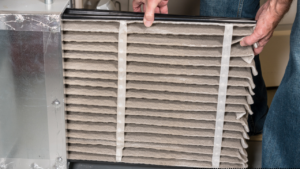
- Upgraded HVAC filtration to capture airborne particles as air passes through the system [2]
- HEPA filtration (often installed as a bypass system) for high-level particle removal [3]
- UV light purification to help neutralize certain microorganisms as air moves through the unit [3]
- Activated carbon for odor control and some chemical vapors [1]
The result is continuous air cleaning whenever your HVAC is running without the noise, clutter, or “one-room-at-a-time” limitation of portable units.
Can these systems help with viruses and bacteria?
When used correctly, air cleaners and HVAC filters can help reduce airborne contaminants, including particles containing viruses. That said, reputable guidance is clear: air cleaning alone isn’t a complete solution. It works best as part of an overall indoor air quality strategy (filtration + ventilation + good household practices). When evaluating options, it’s important to avoid products that intentionally generate ozone; ozone generators aren’t recommended in occupied spaces [2].
Other benefits homeowners notice fast
Even if your main goal is healthier air during cold and flu season, purification often improves day-to-day comfort too, like fewer allergy flare-ups, reduced odors, and less dust settling around the home. Many homeowners also appreciate that a whole-home solution provides broader coverage than running multiple standalone units.
Is a whole-home system right for your house?
If your household deals with allergies, asthma triggers, lingering odors, frequent respiratory irritation, or you just want peace of mind during peak sick season, a professional evaluation is the best next step. The right setup depends on your HVAC system, home layout, and what you’re trying to remove from the air. Contact C.D. Shanahan’s today to help you compare options, choose the right level of filtration/purification, and install a system that supports cleaner air throughout your home.
Sources: