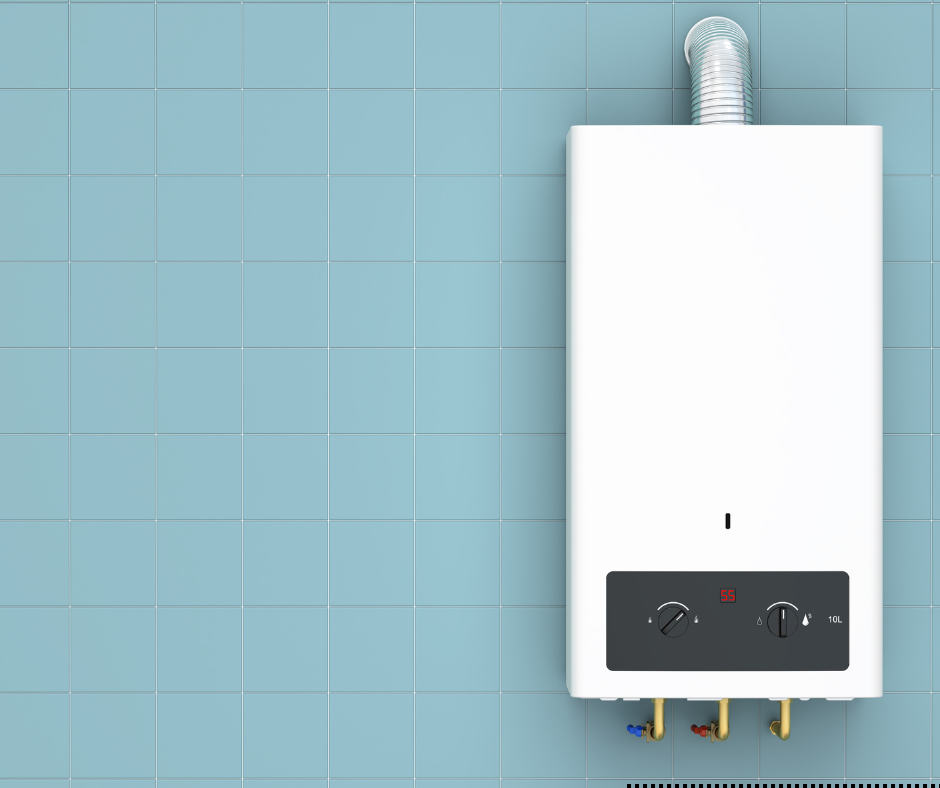
When you start thinking about switching from a traditional tank to a tankless water heater, it’s not just a simple “swap it out” project. Tankless systems can be a great upgrade for Northern Virginia homeowners, but only if your home, budget, and expectations are all aligned first.
Here are the key considerations to walk through before you make the jump.
#1: Decide if it’s the right time to replace
Before you upgrade, ask whether your current water heater is nearing the end of its lifespan. Most tank-style units last around 8-12 years, while tankless water heaters can often run closer to 20 years with pepper maintenance [1]. If your tank is older, frequently repaired, producing rusty or discolored hot water, or struggling to keep up with demand, it may be more cost-effective to invest in a new system rather than keep patching the old one.
#2: Understand what “tankless” really changes
Unlike storage tanks that constantly heat a large volume of water, tankless water heaters heat water on demand as it flows through the unit. That design brings a few big shifts [2]:
- Endless hot water within the unit’s capacity, so no more rationing showers because the tank “ran out”
- Improved energy efficiency and reduced standby losses, since you’re not keeping 40-50 gallons hot 24/7
- A more compact footprint that frees up floor space in basements, closets, or utility rooms
At the same time, output is limited by flow rate. A single tankless may struggle if you expect to run multiple showers and hot-water appliances at once, so proper sizing becomes critical [1].
#3: Check your home’s electrical, gas, and venting needs
One of the biggest surprises for homeowners is what’s happening behind the scenes. Tankless units, especially electric, can demand far more from your home’s infrastructure than a standard tank.
- Electric tankless water heaters often require 120-150 amps of dedicated power, compared to a single 30-amp breaker for many electric tanks. That can mean panel upgrades, new breakers, and heavy-gauge wiring if your current service is 100-150 amps or your panel is already full [3].
- Gas tankless units typically need larger gas lines and proper venting to safely handle higher BTU output and exhaust. That can involve new gas piping, vent relocation, or adding dedicated venting runs depending on where the unit is installed.
This is where a licensed plumbing, gas, and electrical contractor like C.D. Shanahan’s is invaluable because we can evaluate your panel capacity, gas supply, and venting options so you’re not caught off guard by hidden upgrade costs [4].
#4: Make sure the size fits your family’s usage
Tankless systems are sized based on flow rate (gallons per minute) and temperature rise, not just tank volume [4]. A family that runs the dishwasher and a shower at the same time has very different needs from a single-occupant condo.
Before you choose a model, you’ll want to look at:
- How many fixtures you realistically run at once
- Whether you need simultaneous plus laundry or dishwashing
- The typical temperature rise required from incoming cold water
In some cases, a single whole-home tankless works perfectly. In others, you may want multiple tankless units or a high-efficiency tank option instead [1]. A proper sizing consultation helps you avoid lukewarm showers and frustration.
#5: Weigh upfront costs against long-term savings
It’s true that tankless water heaters generally cost more up front than storage tanks, especially once you factor in any necessary panel upgrades, gas line work, or venting changes [1].
However, with tankless water heaters you’re also getting:
- Higher efficiency and potential energy savings over time [2]
- A longer expected lifespan (often close to double a standard tank) [4]
- Reduced risk of large tank leaks that can cause water damage
Think of it as a long-term investment: if you plan to stay in your home and use a lot of hot water, a properly installed tankless can pay you back in comfort and operating savings over its lifetime.
Talk to C.D. Shanahan’s before you make the switch
Switching from a tank to tankless is a smart upgrade, but it’s not a “one size fits all” decision. The best results come from pairing the right tankless system with a realistic look at your home’s electrical, gas, and venting setup.
As a multi-generation, family-owned Northern Virginia HVAC and plumbing team, C.C. Shanahan’s can:
- Inspect your existing water heater and overall system
- Assess electrical panel, gas line, and venting requirements
- Recommend tankless options sized to your household’s usage
- Install everything safely and up to code, with the meticulous attention to detail we’re known for
If you’re considering upgrading to tankless, contact C.D. Shanahan’s today to schedule a consultation and find out whether it’s the right move for your home and budget.
Sources:
- https://www.energy.gov/energysaver/tankless-or-demand-type-water-heaters
- https://smithandkeene.com/advantages-of-a-tankless-water-heater/
- https://www.cainelectricstl.com/st-louis-electrician-blog/tankless-water-heater-electric-requirements/
- https://www.adavenplumbinginc.com/blog/considerations-before-switching-to-a-tankless-water-heater